

 Not to be missed in Sicily
Rent a luxury villa in Sicily for your holiday in Italy by the sea. Exclusive high end contemporary and traditional villas for rent in Sicily make for an authentic sun splashed Italian vacation.
Head to one of the most admired archaeological sites in the world, the Valley of the Temples in Agrigento. Marvel at the best preserved Greek temples surrounded by olive groves and almond trees and soak up all the history.
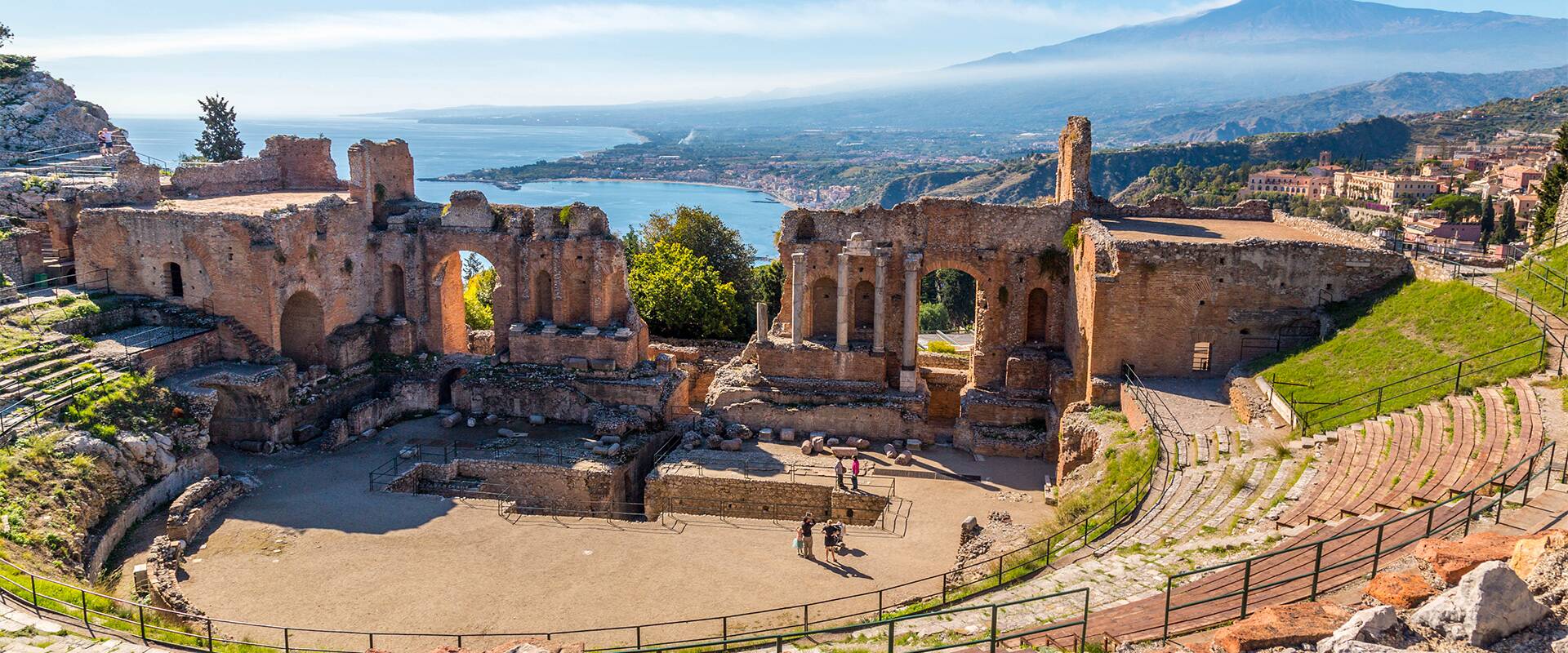
Take a stroll through the cobbled streets of Taormina, a fascinating medieval town situated on a mountain top dominating the Ionian coast. Don’t’ miss the Greek amphitheatre, with its famous panoramic view of Mount Etna and the sea and stop by at one of the many eateries to feast on local delicacies.
Explore one of the most important and beautiful cities of the ancient Greek world, Syracuse boasts striking architecture, a charming old city with narrow streets and an extensive archaeological park. Don’t miss a visit to the cathedral that was the ancient Temple of Athena.
Head to Ragusa and Noto for a taste of exquisite Baroque architecture and art.
Discover the intriguing range of architectural styles of Palermo, from Arabian domes to baroque buildings and take in the animated vibe in one of the capital’s street markets. Visit the nearby Monreale, famous for its fine mosaics and the imposing Norman cathedral.
Visit the great Greek archaeological site of Selinunte, the park is vast including temples, ancient town walls, and the ruins of residential and commercial buildings. Its location is unique as it is wonderfully set near the sea.
view luxury villas for rent in Sicily

 Culinary wonders in Sicily
Thanks to its history and geography, Sicily boasts a rich culinary tradition drawing on dishes from ancient Greeks with Arab influences combined with exceptionally fresh and genuine ingredients.
Whether you prefer authentic Italian meals in family-run trattorias, snacking on with street food, indulging in seafood dishes while gazing at the beautiful colors of the sea, enjoying a pizza, or you prefer gourmet dining in one of the excellent Michelin-starred restaurants across the island, the experience will certainly be a memorable one.
Because of the teeming sea, fish and seafood is a specialty, especially tuna, sardines, clams, anchovies, swordfish and prawns. Don’t miss one of the traditional first courses pasta con le sarde: pasta and sardines served in a sauce made of tomatoes, pine nuts, raisins, fennel, garlic, onion, white wine and topped with bread crumbs.
Vegetables dishes such as eggplants often take the place of meat, vegetarians lovers will delight in the delicious caponata made with chopped fried eggplants and celery dressed in a sweet and sour sauce.
All those with a sweet tooth should not miss the typical cannoli, sweet crusty tubes filled with fresh ricotta and flavored with nuts, chocolate or candied fruits.
Wine lovers will not be disappointed by the complexity and abundance of vineyards. Some of Italy’s finest wines are produced in Sicily thanks to its autochthonous grape varieties and its fertile soil.

 Sports and leisure in Sicily
Attend a ballet or an opera performance at the baroque Teatro Massimo Vittorio Emanuele in Palermo. Step back in time and enjoy an open air concert at one of the most fascinating historical monuments on the island, the Greek amphitheatre in Taormina.
If you are up for an active holiday, head to Mount Etna and hike Europe’s highest active volcano. The mountain offers a great variety of trekking and nature trails. Or go on a jeep excursion to explore Sicily’s highest mountain, the sight of this natural wonder will leave you awestruck.
With over 1000km/620miles of coastline and countless beaches the island offers a great variety of water sports, such as kitesurfing, wakeboarding, canoeing, or waterskiing.
There are countless dive sites around Sicily, explore the diverse and varied seabed. Snorkelers will be amazed by translucent waters and an exceptional multitude of fish.
The hilly and mountainous landscape in Sicily is ideal for cyclists, discover the countless trails and pedal through scenic routes and fascinating landscapes.
Sicily also boasts some beautiful and enjoyable 18-hole golf courses, strategically situated in some of the island's most beautiful sceneries, Il Picciolo Golf Club is probably the most impressive being located on the slopes of Mount Etna.

 Around Sicily
Don’t miss the pristine cove of Cala rossa on the nearby island of Favignana, with its incredibly turquoise-blue clear water and cliffs looming over the shores, this bay offers one of the most scenic spot for a relaxing beach day.
Explore the Aeolian archipelago composed of seven unique volcanic islands, two of which are still considered active. Relax in whitewashed villages and enjoy the cobalt sea.
Head to Calatifimi and admire Segesta’s amphitheatre and Doric temple, one of the best preserved in Sicily. The location is stunning as the temple sits atop a hill and dominates the beautiful valleys below.
Wander through the narrow medieval streets of the town of Cefalù, visit the splendid Norman cathedral, and the Sicanian temple sitting on the rocky cliff overlooking the town.
Ride a cable car to the mesmerizing walled medieval town of Erice set on a mountain top and enjoy the sweeping views of the sea and the surrounding valleys.
Admire some of the world’s oldest and well preserved Roman mosaics at Villa Romana del Casale just outside the historic town of Piazza Armerina.

 Top 5 beaches in Sicily
Soak up the Sicilian sun and unwind on one of the myriad of spectacular beaches on the island.
The choice can be tricky, here is our top 5 selection:
1. San vito lo Capo (Riserva dello Zingaro): known as the Sicilian Caribbean, the beach lies on a bay between spectacular mountains giving the impression to be sinking into the sea. White sand, stunning crystal clear waters, and breathtaking views over the surrounding Zingaro natural reserve, make it one of the most striking spots on the island.
2. Scala dei turchi: situated in the province of Agrigento, its name comes from the incredible shape of the rock that makes a natural stunning white staircase leading into limpid turquoise beach. This cove is perfect for active vacationers as it mostly involves climbing to get there.
3. Isola bella: a wild and small nature reserve in Taormina. This charming island is an extension of the mainland connected by a thin strip of pebble beach with shallow waters. Surrounded by vegetation and dominated by a fortress it is a truly unique sight.
4. Fontane Bianche: a long stretch of coastline, close to Syracuse. Thanks to its warm, shallow sea waters, and great facilities this beautiful beach is one f the most child-friendly on the island.
5. Riviera dei ciclopi: a unique coastline stretching amidst history, nature and old legends between Catania and Acireale offers its visitors picturesque sceneries with black volcanic rock formations, charming fishing villages, as well as seafront trendy clubs and restaurants.
 When to go
Being one of the most southern Mediterranean islands, Sicily boasts a pleasant climate that makes it a perfect destination for much of the year.
The warm-weather season on the island is longer than anywhere else in Italy, spring starts early, and autumn arrives late, the shoulder seasons are the best time of the year for sightseeing as there are less crowds, and the sea water is warm enough for swimming.
Although the summer months are characterized by heat and full sun, the sea breeze in coastal areas and the incredibly refreshing sea waters make the temperature bearable.
Ski lovers should not miss a visit during the winter months, skiing down the slopes of Mount Etna is truly a unique experience.
 Average temperatures
January
13°
February
13°
March
15°
April
16°
May
20°
June
25°
July
28°
August
28°
September
25°
October
21°
November
17°
December
14°